
ACLJ – In a landmark decision today, the Supreme Court reaffirmed that prayer before legislative meetings is constitutional.
In debunking one of the greatest myths in Establishment Clause jurisprudence, the Court held that not only is opening such meetings in prayer Constitutional, it is not limited to nonsectarian (i.e. generic) prayer. In other words, a prayer “in Jesus name” does not violate the Constitution.
Decades ago in Marsh v. Chambers the Supreme Court held that prayer before legislative meetings (Congress, town councils, etc.) did not violate the Constitution. Now, a group opposed to legislative prayer was attacking the Town of Greece, New York for allowing prayer before meetings because essentially all the prayers were Christian. The town’s policy was to allow all prayers, but because most of the town and those who asked to open meetings in prayer were Christian, so were the prayers. As the Court explained, those challenging the prayers were arguing, “in effect, that legislative prayer may be addressed only to a generic God.” In today’s 5-4 Town of Greece v. Galloway decision, the Court emphatically rejected this notion.
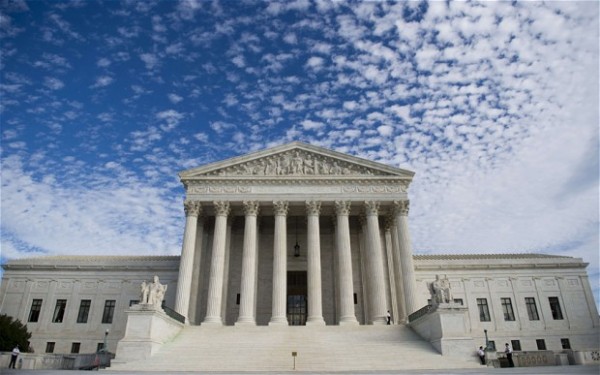
- ( The Supreme Court upheld the constitutionality of prayer at government meetings. )
The high Court was explicitly clear: the Establishment Clause does not require all prayer before legislative meetings to be generic – referencing some generic “God” – such that the listener could not determine what faith perspective they are praying from.
The Court explained:
An insistence on nonsectarian or ecumenical prayer as a single, fixed standard is not consistent with the tradition of legislative prayer outlined in the Court’s cases. The Court found the prayers in Marsh consistent with the First Amendment not because they espoused only a generic theism but because our history and tradition have shown that prayer in this limited context could “coexis[t] with the principles of disestablishment and religious freedom.”
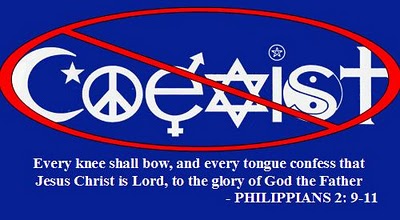
( Philippians 2:10-11 KJV ) “That at the Name of Jesus Christ-MESSIAH – Yeshua HaMashiach-MESSIAH every Knee should Bow, of things in Heaven, and things in Earth, and things under the Earth; And that every Tongue should Confess that Jesus-Yeshua Christ is LORD, to the Glory of GOD the FATHER.”!!
The Court noted as a matter of historical fact that “[t]he Congress that drafted the First Amendment would have been accustomed to invocations containing explicitly religious themes . . . .”
The Supreme Court also soundly rejected the notion that because times have changed such prayers now somehow violate the Constitution. The majority stated, “The decidedly Christian nature of these prayers must not be dismissed as the relic of a time when our Nation was less pluralistic than it is today.”
Moreover, the Court correctly noted that to delve into the contents of individual invocations delivered before legislative bodies would force courts “to act as supervisors and censors of religious speech.” To do so would “involve the government in religious matters to a far greater degree” that would be permissible under the Constitution.
At the ACLJ, we filed an amicus brief in this case defending the practice of legislative prayer. Today’s decision is a monumental victory.
Read More at Via: Kristin and Friends Website!!


 Kristi Ann's Haven